
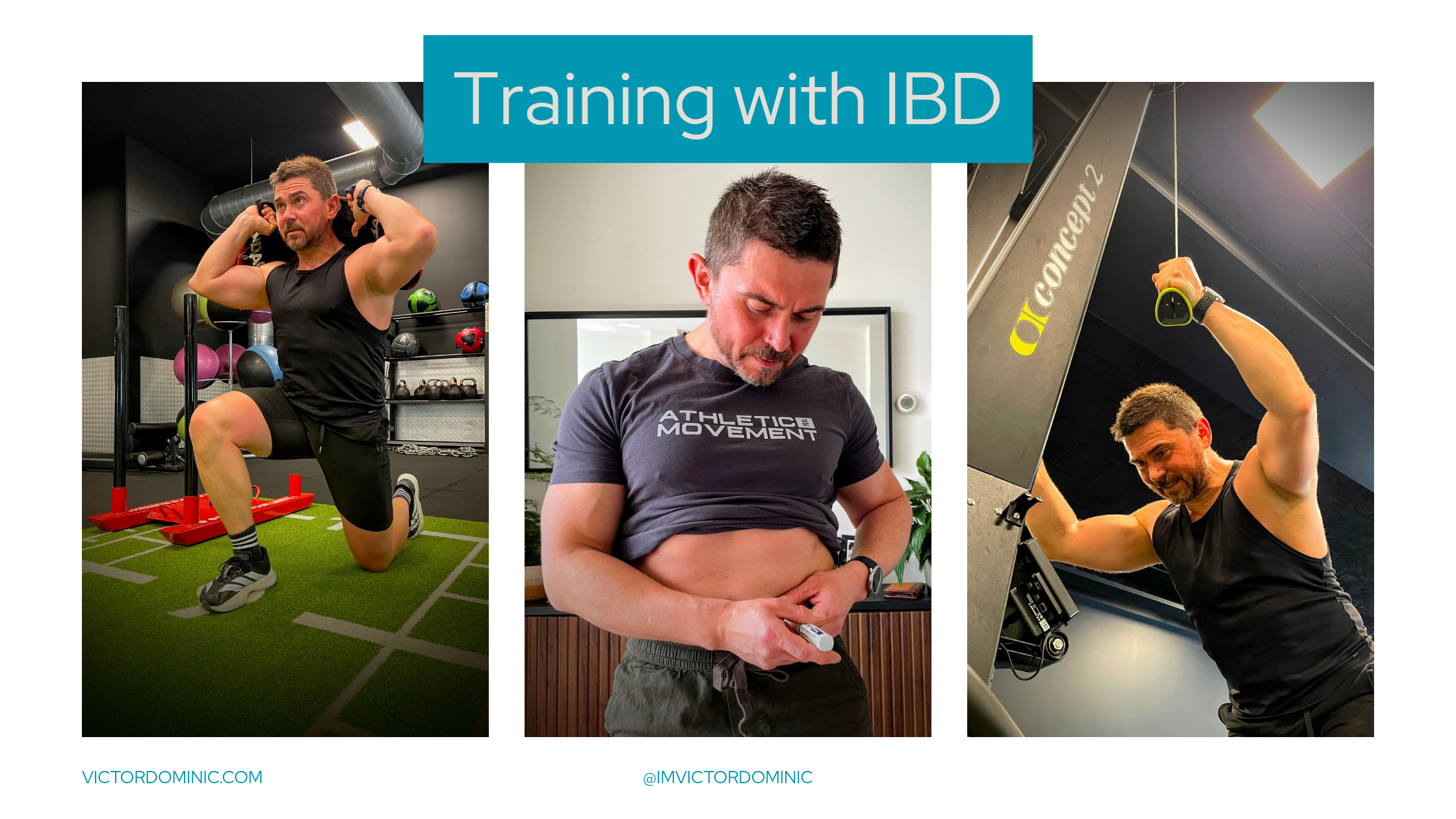
Living with Crohn’s disease or Ulcerative Colitis (IBD) often feels like managing a complex, ever-changing equation. When you add gym, high-intensity training, bodybuilding, or endurance sports into the mix, that equation gets even more intricate.
As a coach who works with athletes navigating the realities of chronic illness, I see the same question come up repeatedly: How do I train hard without triggering a flare, and how do my medications actually fit into my training protocol?
If you are tired of the generic “just go for a gentle walk” advice, you aren’t alone. Achieving high-level performance while managing IBD is entirely possible, but it requires a strategic, evidence-based approach to your training load and pharmaceutical support.
The Intersection of IBD Therapy and Training Performance
To train effectively, you must understand how your body is responding to its primary line of defense: your medication. These treatments don’t exist in a vacuum; they interact with your metabolic rate, immune function, and recovery capacity.
5-ASA (Mesalamine) and Topical Therapies
For many, these are the foundation of maintenance. Systemically, they are largely neutral, meaning they shouldn’t directly hamper your strength or endurance.
The Pro-Tip: If you utilize rectal therapies like suppositories or enemas, timing is everything. Physical exertion, especially core-heavy or high-impact work, can stimulate peristalsis. Aim to administer these post-training to ensure full absorption and avoid premature evacuation.
Immunosuppressants (Azathioprine / 6-MP)
These medications are highly effective but can impact your blood counts.
The Athlete’s Watch-Point: Dose-dependent bone marrow suppression can lead to mild anemia, which is a direct performance killer. If you experience a sudden, unexplainable drop in VO2 max or muscular endurance that doesn’t track with your training volume, don’t just tough it out. This is a physiological signal to check your blood markers with your GI specialist.
Biologics (TNF, Integrin, IL-23 Inhibitors)
Biologics have revolutionized the management of IBD, allowing many athletes to remain in deep remission. However, because they modulate the immune system, you are inherently more susceptible to common gym-borne pathogens.
Performance Strategy: Your recovery protocol should include rigorous hygiene. Cover any skin abrasions immediately, and listen to your body. If you feel a systemic fever or localized infection brewing, prioritize immune health over the workout—pushing through here can lead to a long-term setback.
Small Molecules (JAK Inhibitors / S1P Modulators)
These oral therapies act rapidly but can induce transient shifts in lipid profiles (cholesterol) and white blood cell counts.
The Hypertrophy Factor: If you are a bodybuilder or strength athlete in a caloric surplus, monitor your lipid panel. A dirty bulk approach combined with these therapies may compound cardiovascular strain. Keep your blood work transparent with your medical team.
The Corticosteroid Trap: Debunking the Anabolic Myth
There is a persistent misconception that corticosteroids are anabolic. Let’s be clear: They are not anabolic. In fact, they are profoundly catabolic.
The Biological Reality: Corticosteroids inhibit muscle protein synthesis and impair collagen synthesis, which keeps your tendons and ligaments structurally vulnerable. Training at maximal intensity or performing high-impact plyometrics while tapering off these meds significantly increases your risk of muscle tears and stress fractures.
Building Resilience: The U-Shaped Curve
Exercise is a powerful immunomodulator. Moderate-to-high intensity training can trigger an anti-inflammatory response through the release of specific myokines. However, there is a U-shaped threshold. Excessive, unrecovered training volume can suppress your immune surveillance and trigger a flare.
Resilience is built through periodization, not brute force.
How to Coach Your Recovery
If you are serious about your progress, your training plan must be backed by data:
Faecal Calprotectin: Use this as your primary metric to confirm gut remission before pushing for a new PR or entering a heavy growth phase.
Blood Panels: Monitor CRP, Albumin (nutrition status), and B12/Vitamin D levels every 3–6 months.
Protein Intake: Because IBD can alter nutrient absorption, target the higher end of the standard protein spectrum (1.8g–2.2g/kg) to ensure you are actually achieving nitrogen balance.
Disclaimer: I am a fitness coach, not a gastroenterologist. This information is intended for educational purposes and should not replace medical advice. Always correlate your training intensity with your specific blood work and endoscopic findings through your medical team.
Looking for a coach who understands the nuance of training with IBD? I specialize in helping people build strength and performance without sacrificing their long-term health. If you are ready to stop guessing and start training with a protocol that respects your physiology, feel free to reach out for a consultation. Let’s build a plan that works with your body, not against it.